Hugo Roellinger, living cooking
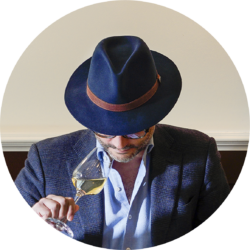
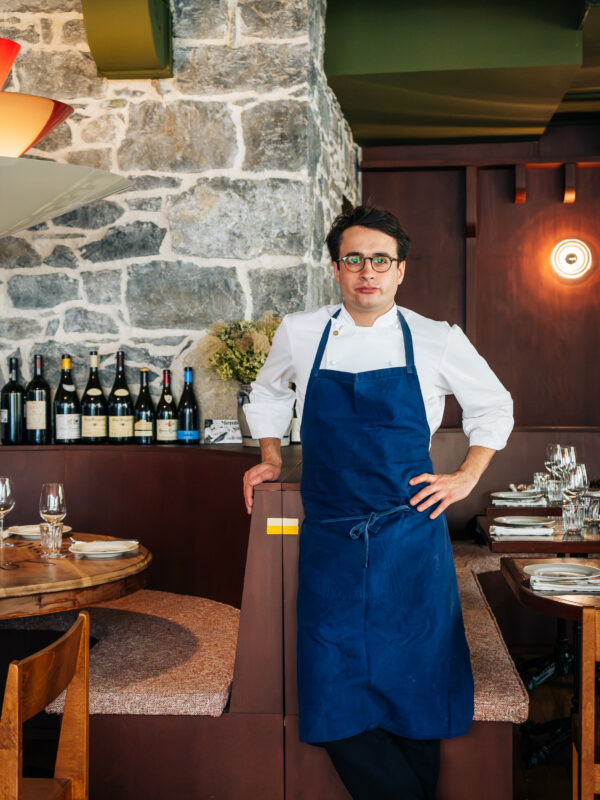
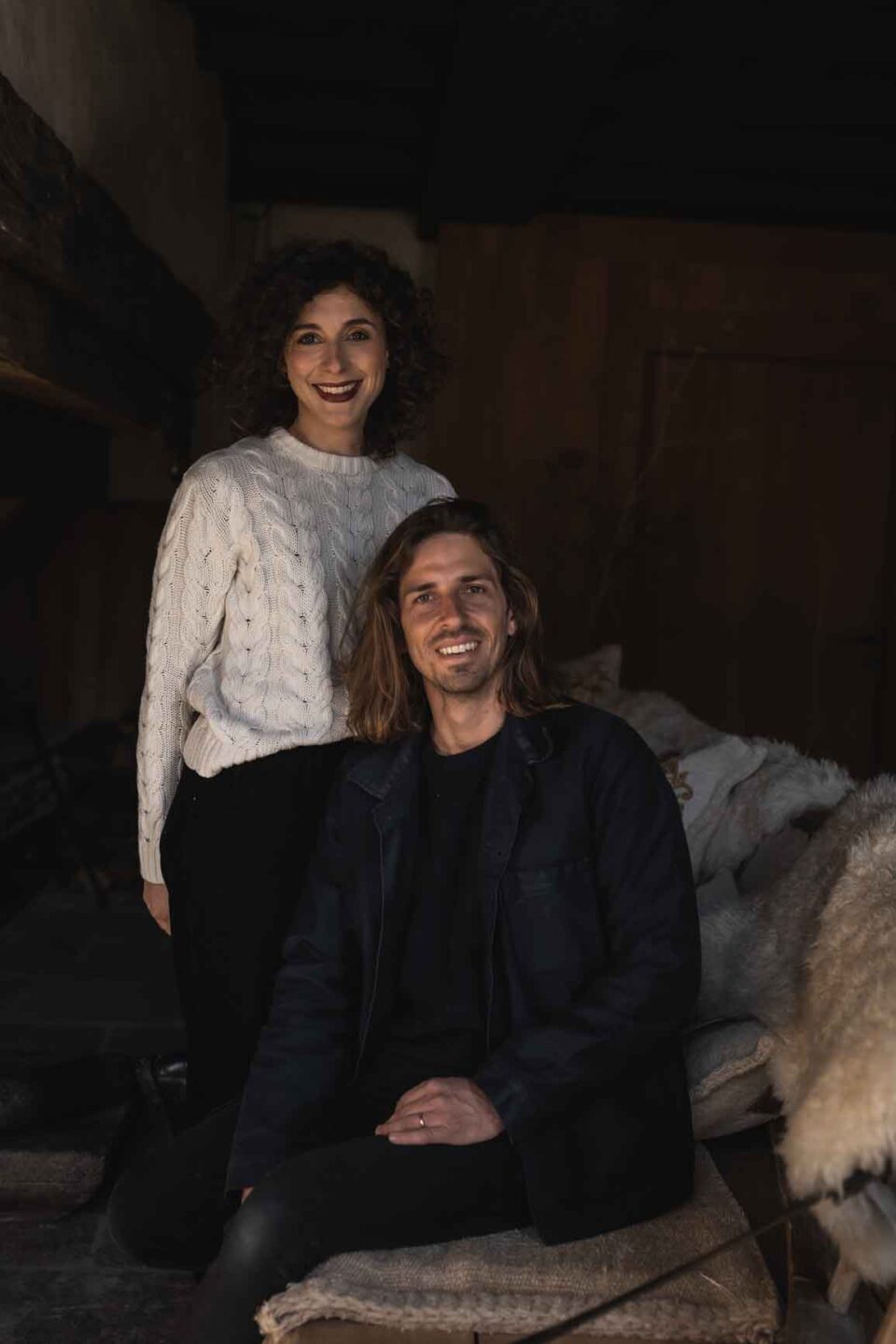
The day after an anthological meal, the light stretches out over Cancale. Hugo Roellinger settles down with a coffee in his hand in a cosy living room filled with vinyl, spices and souvenirs of his travels. His gaze is both distant and precise, as if probing the skyline of Mont-Saint-Michel, visible from the windows. Dressed in black, with a blue overshirt reminiscent of work jackets, he embodies a paradox: that of a three-star chef who has never sought to shine. Discreet, almost secretive, driven by a magnetic energy. A pirate without a boarding sword, a poet outside the circle.
Taboo transmission
“My parents were often away, but I never suffered,” he says calmly. “When I saw them, I spent precious moments with them. In summer, we’d escape to the sea. In August, it was the opening of the bouquet fishing season. I remember the rocks at low tide, the cold sand underfoot, the smell of seaweed and iodine. We’d cook the shrimp on the boat and eat them as a family.” These childhood images – the lapping of the water, the intensity of the waves on the rocks, a father’s hand showing the way between the puddles – are the foundations of his sensibility, which he hides from the public.
For him, cooking was not born of direct transmission, but of a carnal memory, an instinctive relationship with nature. “My parents never pushed me into this profession, quite the contrary. Transmission was taboo at home,” he confides. You had to go somewhere else, lose yourself for a while. Before coming back to himself. Hugo first chose the sea, the real thing: four years of merchant marine studies, spent sailing on cargo ships, crossing other latitudes, other ports, hearing other silences, looking at the horizon. “This profession has taught me rigor, solitude and respect for the elements.
Assumed errors
Underneath his calm exterior, the chef reveals himself to be demanding. “I give the impression of being cool, but I’m very fussy: first of all with myself, and then with others. He may have inherited this strictness, but above all, he chose it. Unlike other gastronomic lineages, the transmission between Olivier and Hugo Roellinger was neither direct nor linear. “I never cooked with my father. The patriarch, lucid, simply told him: “Make your mistakes, I’ve made so many. A simple sentence, but a founding one.
So Hugo took the time to build his skills elsewhere: with Michel Guérard, the Troisgros clan and the Bras family in Laguiole. Three worlds, three ways of thinking about taste and gesture. “I was nourished by these houses. They helped me understand that gastronomy is an ecosystem. Each place offered me a different vision of cuisine. As time went by, Hugo realized that he had a story to tell, a sensibility to channel. “There’s an energy, a vibration in the living world that I try to translate into my dishes,” reveals the chef.
Iodized alliances
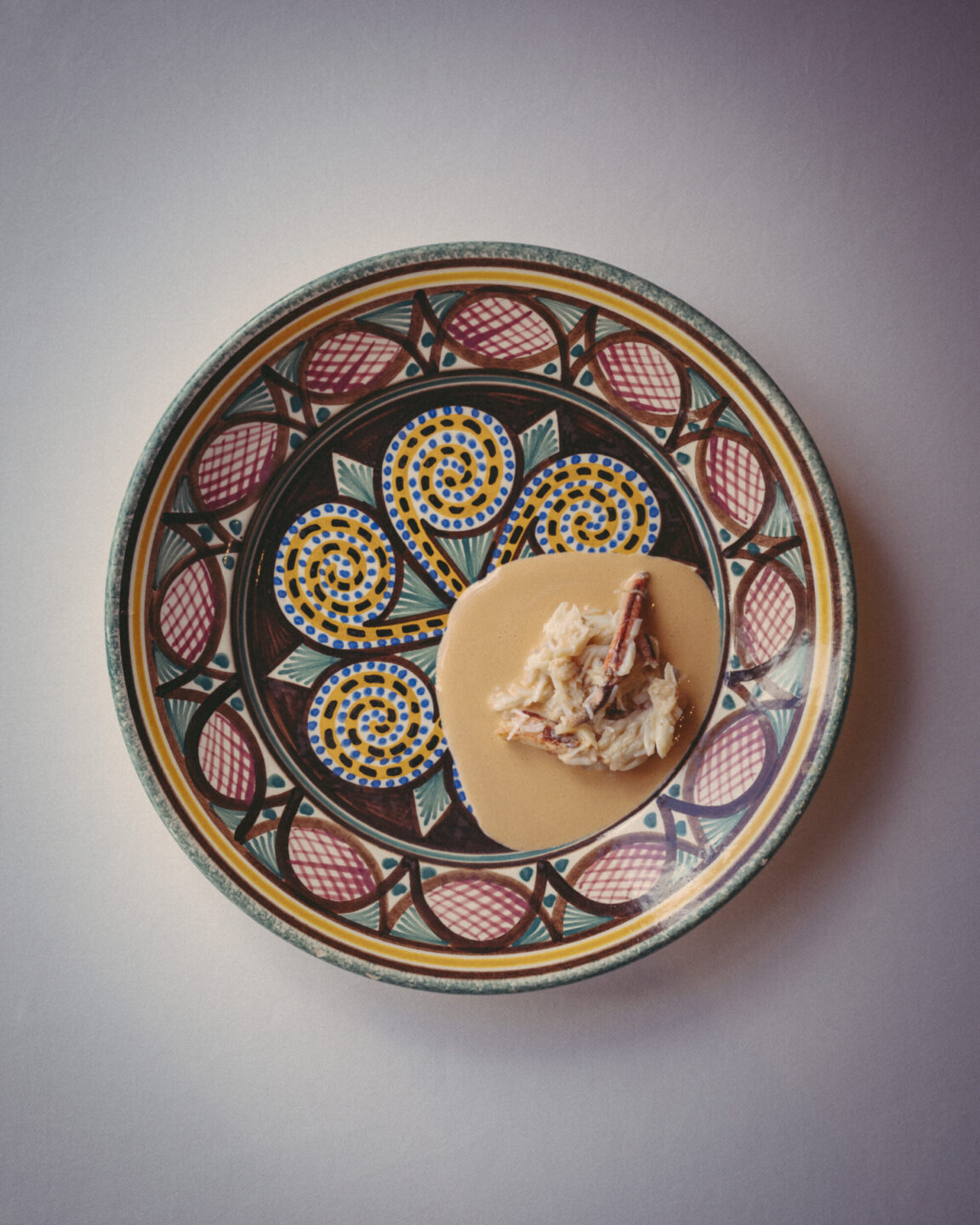
Today, in his restaurant Le Coquillage overlooking the sea, he cooks in constant dialogue with nature. The sea dictates his moods. No meat, but limpid broths, light sauces, vegetal and iodized alliances. “I work a lot in a hurry, I intellectualize, but I certainly don’t want my cooking to be so. What I want is life. Nothing fixed, nothing expected. The flowers in the garden, the wind of the day, the tide of the evening: everything is improvisation.
Every morning, the ritual begins all over again. Nothing is ever taken for granted. “I don’t want a dish to taste like it’s been in the fridge. I want everything to breathe, to throb a little longer. He pursues this living requirement with humility. Like a sailor who knows that the sea cannot be tamed, but only listened to. Hugo Roellinger cooks like one hoists a sail: with precision, patience and strength. His table is not a sanctuary, but a ship. And in the pitching of the plates, in the softness of the broths and in the brilliance of the shellfish cooking, we perceive the beating of the world – fragile, free and ultimately essential.