Alain Passard: Cooking in Harmony with the Land

The weather was beautiful in Paris. A soft light bathed the Rue de Varenne, which had the feel of an Indian summer. It was there, in front of his restaurant, L’Arpège, that I met up with Alain Passard. A van had just arrived from his gardens, loaded with the latest harvest of tomatoes, herbs, eggplants, figs, and a few other treasures of the earth.
Refreshing Break
All the teams are present—the kitchen and dining room staff. Everyone observes, touches, asks questions, and is already imagining the variety of dishes these crates might inspire. The moment seems ordinary, but it isn’t. Alain Passard makes sure it is neither rushed nor sloppy. He calls it a gathering, a “refreshing break”—one of the rare moments when the entire restaurant can come together before the intensity of service begins. It’s not a ceremony; it’s a shared experience.
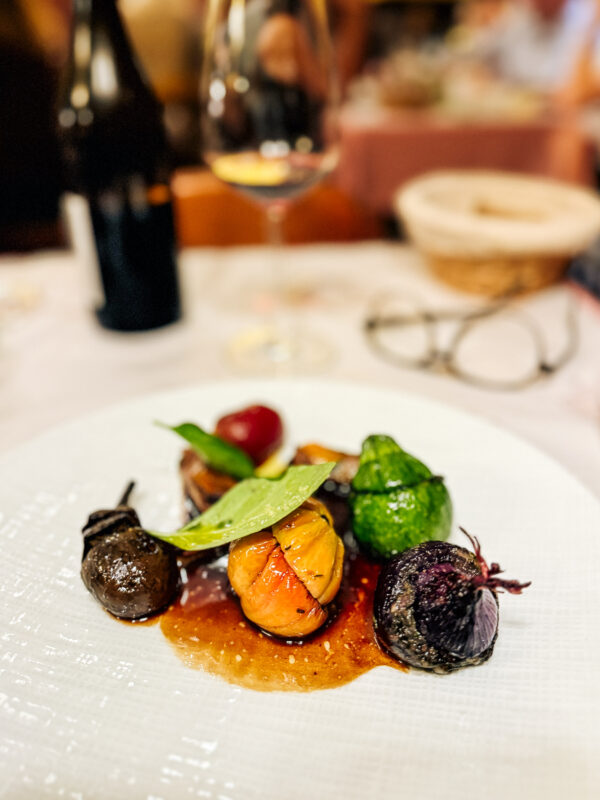
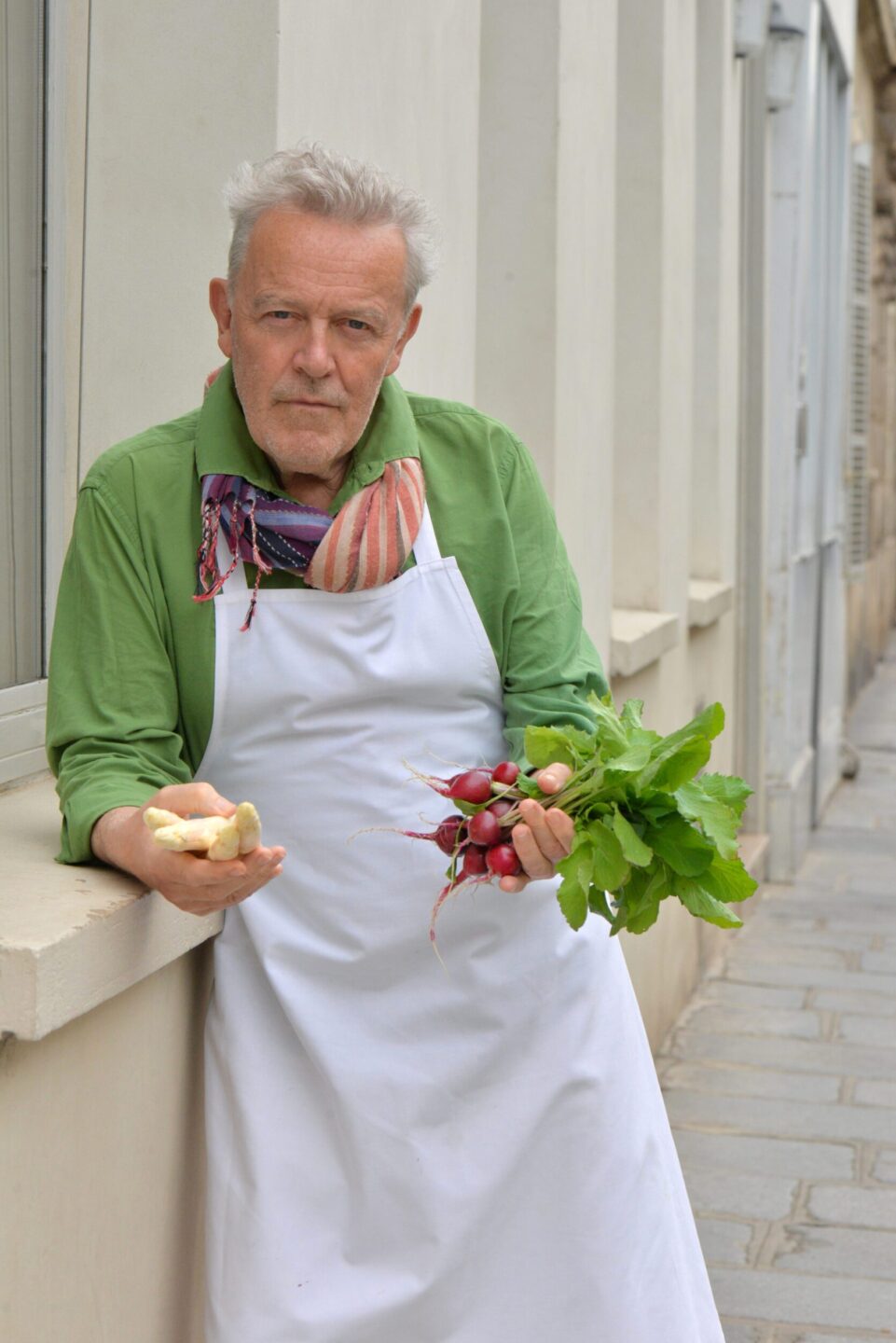
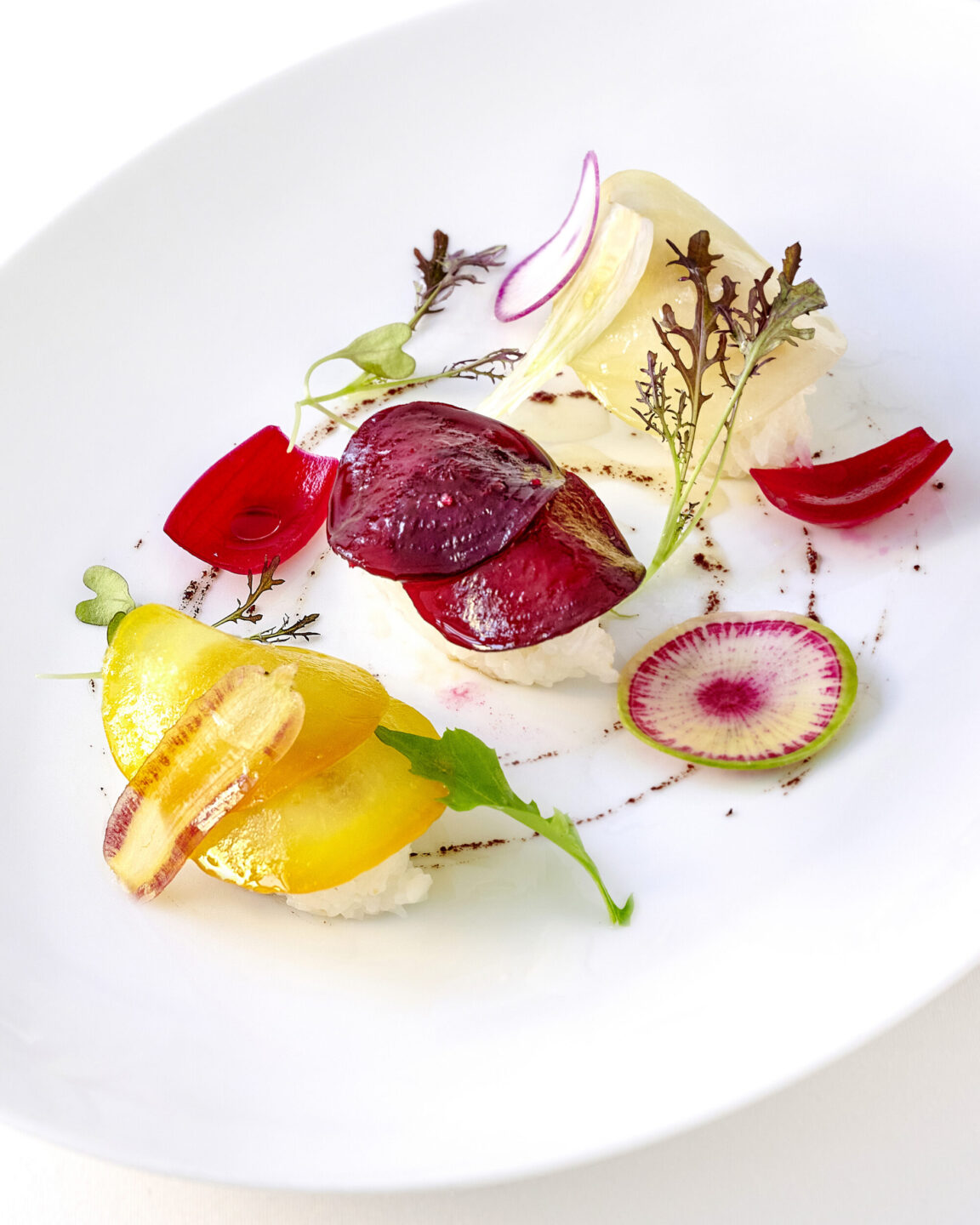
According to the chef, every vegetable here has a story—and even a “passport.” A variety, a region, a gardener’s expertise, a harvest date. This intimate knowledge of the ingredients is a treasure he considers “priceless.” Above all, it allows chefs to visualize before designing, and then to create. We head into the kitchen, where pots, skillets, and pans are already in motion. We lean in a little closer to hear the juices simmering and the vegetables roasting. Sound, too, is a matter of arpeggio. For the past fourteen months, Alain Passard’s kitchen has been entirely vegan. This decision was by no means a sudden break with the past. Mind you, he doesn’t deny any of the culinary traditions that came before him. His past as a meat and poultry roaster taught him to master cooking techniques, textures, and juices—a skill set he now applies to vegetables.
Rediscovered Roots
When he opened L’Arpège in 1986, he could not have imagined the cuisine he would be serving forty years later. He doesn’t try to plan that far ahead. He moves forward, looks ahead, and allows himself to be surprised. Over time, however, some of his great classics began to lose a bit of their luster. From repeating the same motions over and over, a sense of weariness set in. “There always has to be a spark.” ” For nearly two years, without making any grand announcements, the chef reflected on his approach. Month after month, he reduced the amounts of butter, cream, eggs, and cheese. The sauces became lighter. The kitchen staff learned to build balance, depth, and seasoning in new ways.
Alain Passard knew that such a change would provoke reactions. He had prepared for it, both culinarily and mentally. The public went along with it, and his restaurant—which employs about forty staff members—was not financially destabilized. Above all, the chef rediscovered what he had been missing. “I like to unsettle myself in order to find a sense of grounding. ” That sentence alone says it all. After four decades at his restaurant, he could have preserved his legacy and continued doing what he knew how to do to perfection. Instead, he chose to put himself back in the spotlight. Not to erase the past, but to keep pushing his cuisine forward… and to grow as a chef himself.
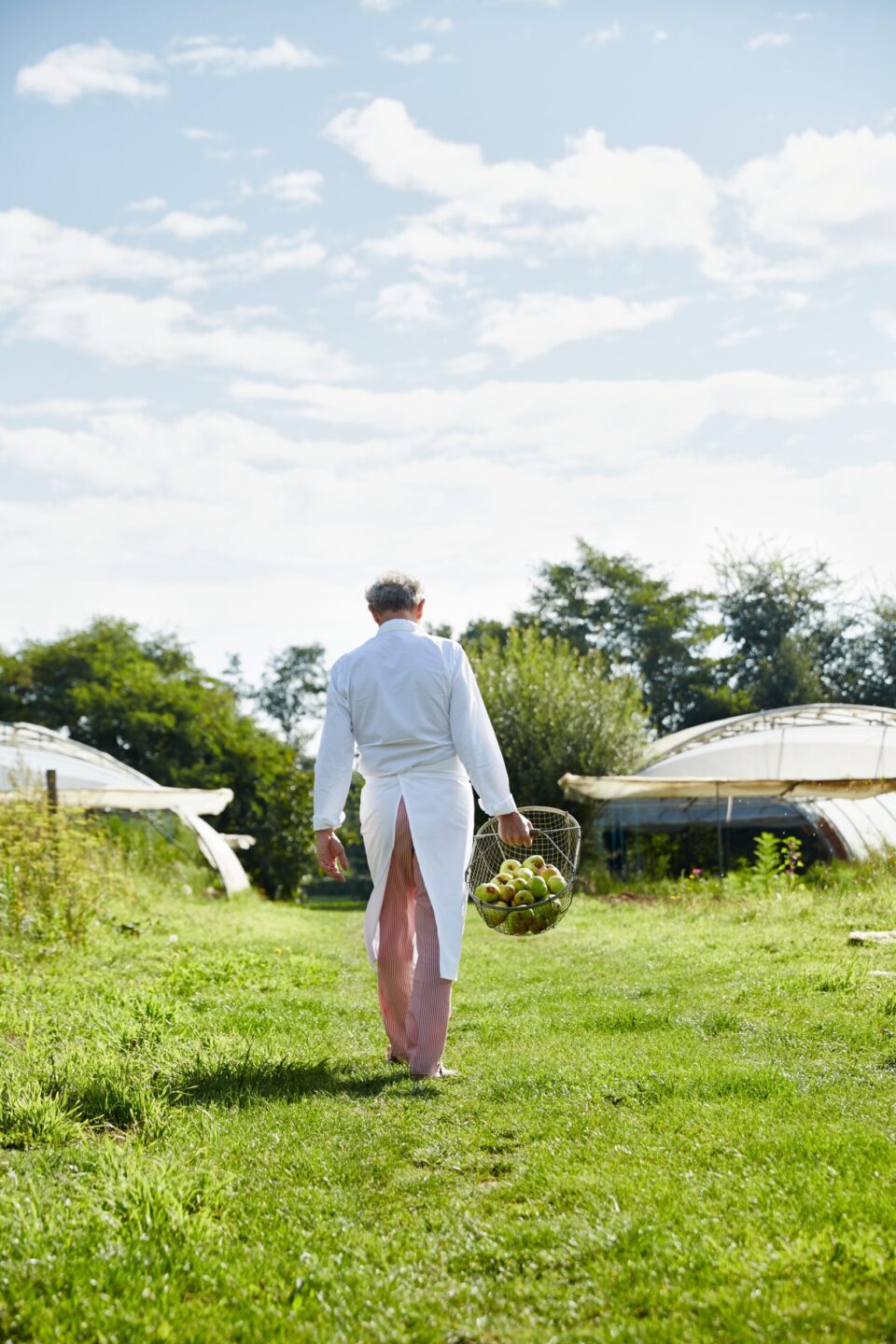
The Rhythm of Nature
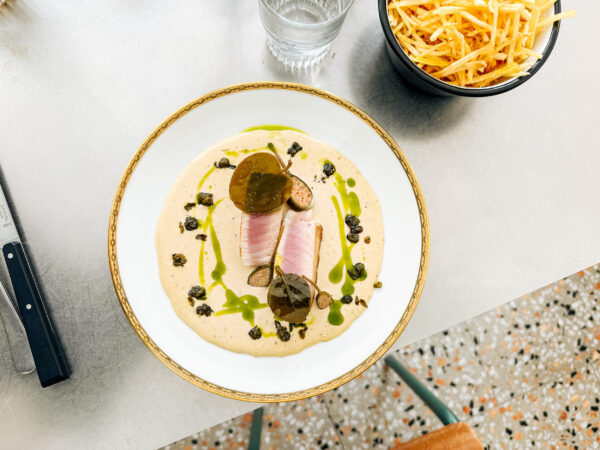
As they look over the morning’s vegetables, the young chefs are already dividing up the crates among themselves. Alain Passard asks them to work freely and to maximize the pleasure they derive from each ingredient. Ask a tomato for everything it has to offer. Cut open a beet, observe its structure, and understand its potential. Free the eggplant, zucchini flowers, or the last tomatoes from the compartments where the kitchen has long kept them locked away.
This dependence on the land also makes L’Arpège’s kitchen vulnerable. The intense heat has slowed the ripening of the tomatoes. The drought threatens the mushrooms and truffles. Like a winemaker, Alain Passard watches the sky, waits for rain, and makes do with whatever the season is willing to give him.
The menu is based on what’s in season. It will change again tomorrow, and then the day after tomorrow. Nature sets the pace. By the end of summer, the chef has no regrets about tomatoes: he’s enjoyed them to the fullest for three months. The light fades, the air cools, and the body craves something else. Ordering a tomato carpaccio in January seems just as incongruous to him as dressing in summer clothes when the temperature is below ten degrees.
Spark Regained
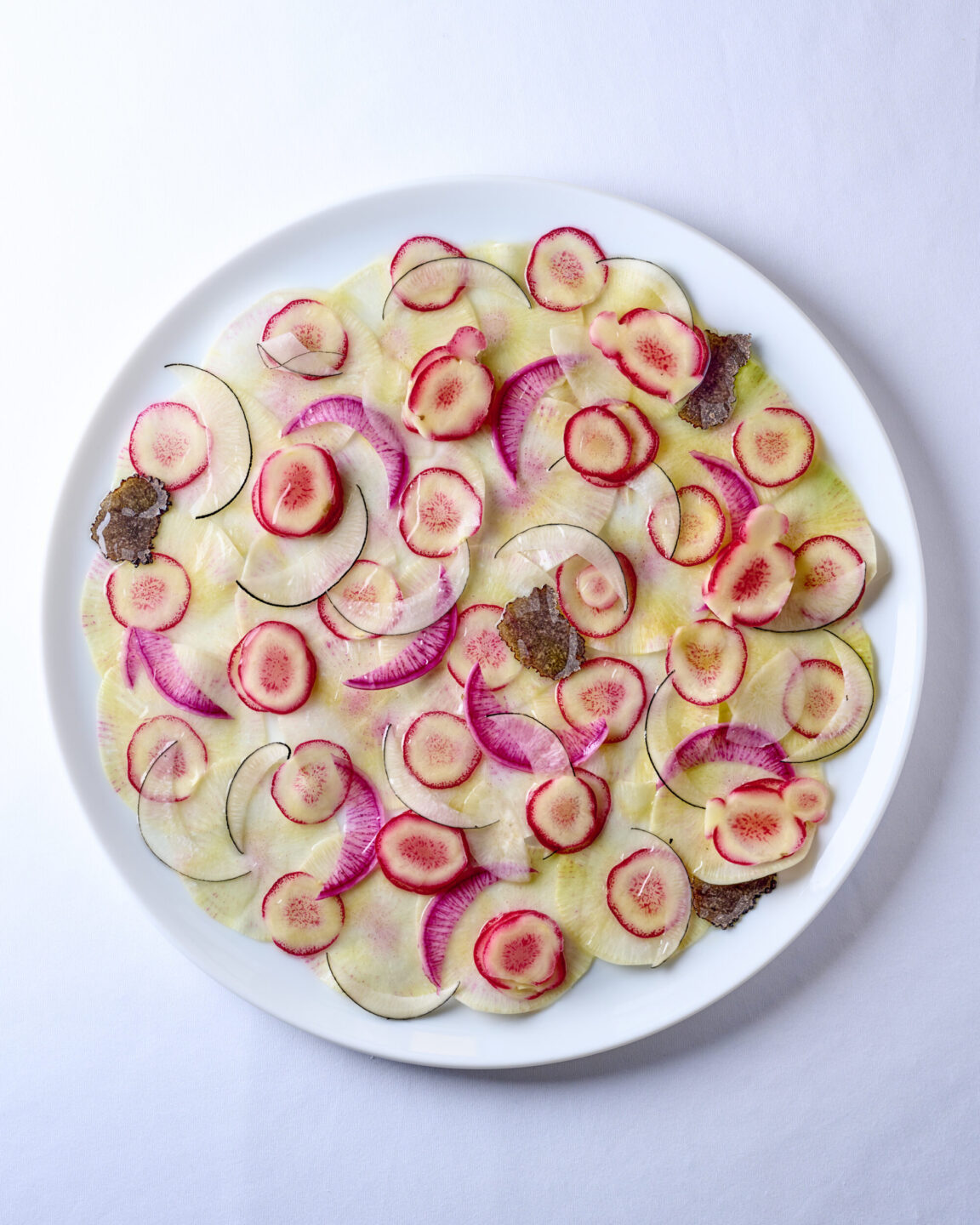
After fourteen months, however, a style is beginning to emerge. In the cooking techniques, seasonings, presentations, and flavor balances, the chef says that some guests are discovering flavors they’ve never tasted before. He senses more emotion in the dining room, and he himself seems radiant. Everyone tells him so. This cuisine has also—and above all—brought him peace. Even behind the stove, the absence of animal suffering has made a difference. He speaks of a gentler, less frantic cuisine, one made of poetry, imagination, and love.
Alain Passard refuses to call himself accomplished. He dislikes the word because it suggests that one has reached the end of the road. Yet this new chapter has only just begun. As he approaches his second fully vegan fall, he remains curious, still playful, and deeply happy. The spark has returned. And with it, the light.