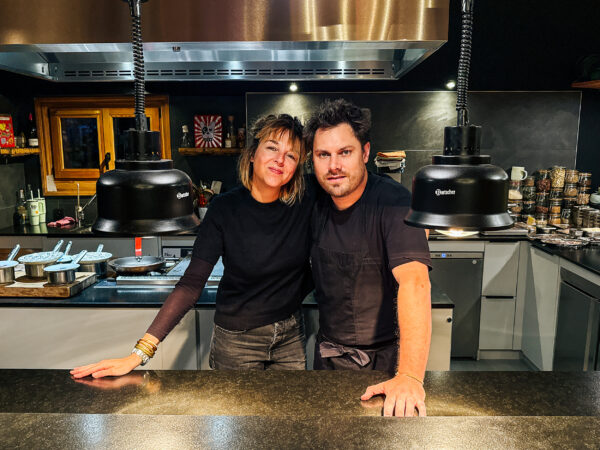
Fud Läb: Cooking as a Language
The kitchen as a “creative playground.” The expression isn’t new, but Fud Läb—aka Michaël Fessler and Yannick Poffet—brings it to life. Behind this Swiss project lies a clear ambition: to turn food into a medium, a form of “soft power” capable of conveying ideas, concepts, and worlds.
Complementary Profiles
The positioning is clear: somewhere between catering and culinary design. Fud Läb doesn’t just serve food—it creates experiences. Pop-ups, brand activations, corporate events: each project is conceived as an immersive experience where the setting is just as important as the content.
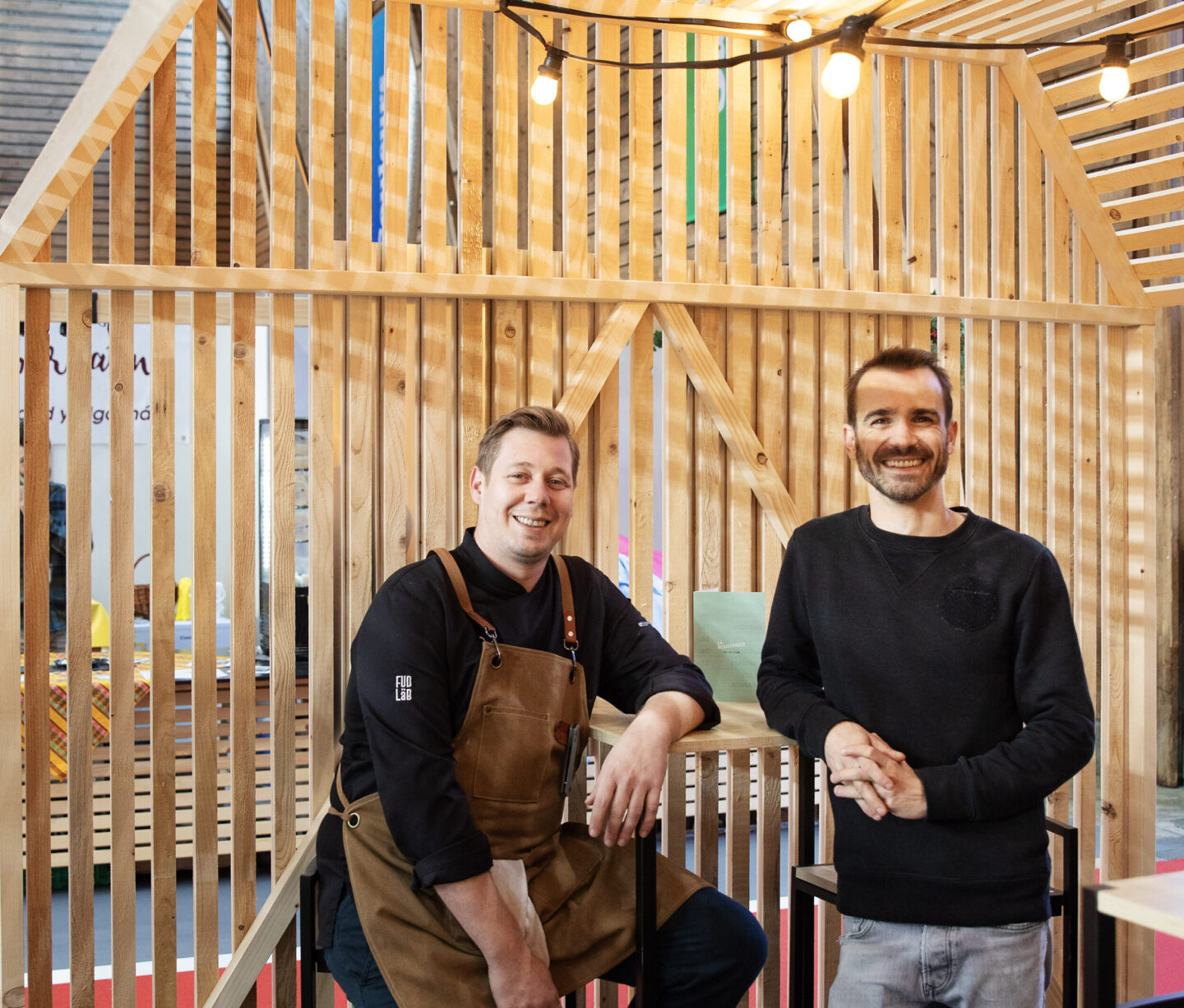
At its core is a team with complementary skill sets. A chef trained at the École Paul Bocuse who works internationally, notably for Hermès in the Middle East. A multimedia designer, accustomed to creating installations that blend art and gastronomy for brands such as Cartier and Puma. And a third member with a background in management and knowledge transfer. Together, they embody a hybrid approach, characteristic of an era in which gastronomy engages in dialogue with other disciplines.
In-Depth Projects
The projects carried out illustrate this diversity. At the 2025 Montreux Jazz Festival, Le Lido served Mediterranean cuisine in a pop-up setting, seating over 300 guests per service for sixteen days. “This is a close collaboration with the MJF, and we’re repeating the experience this year with Le Paloma.” We created a pop-up to celebrate the 25th anniversary of AOP-IGP. We designed, built, and operated this pop-up restaurant with the goal of revitalizing these products, which are all too often prepared and used in the same way,” explains Yannick Poffet. In Bussigny, a collaboration with QoQa explored the culinary possibilities of beer and its derivatives. All of these initiatives demonstrate an ability to combine creativity with operational rigor.
Even more conceptual is the tribute to Jean Tinguely: a culinary machine designed to feed up to 1,500 people, which questions the role of technology in relation to human action. Or projects related to table design, such as “Designer’s Table”—a concept by designer Raphaël Lutz acquired by the mudac—which explore the relationship between the object, the body, and the act of eating.
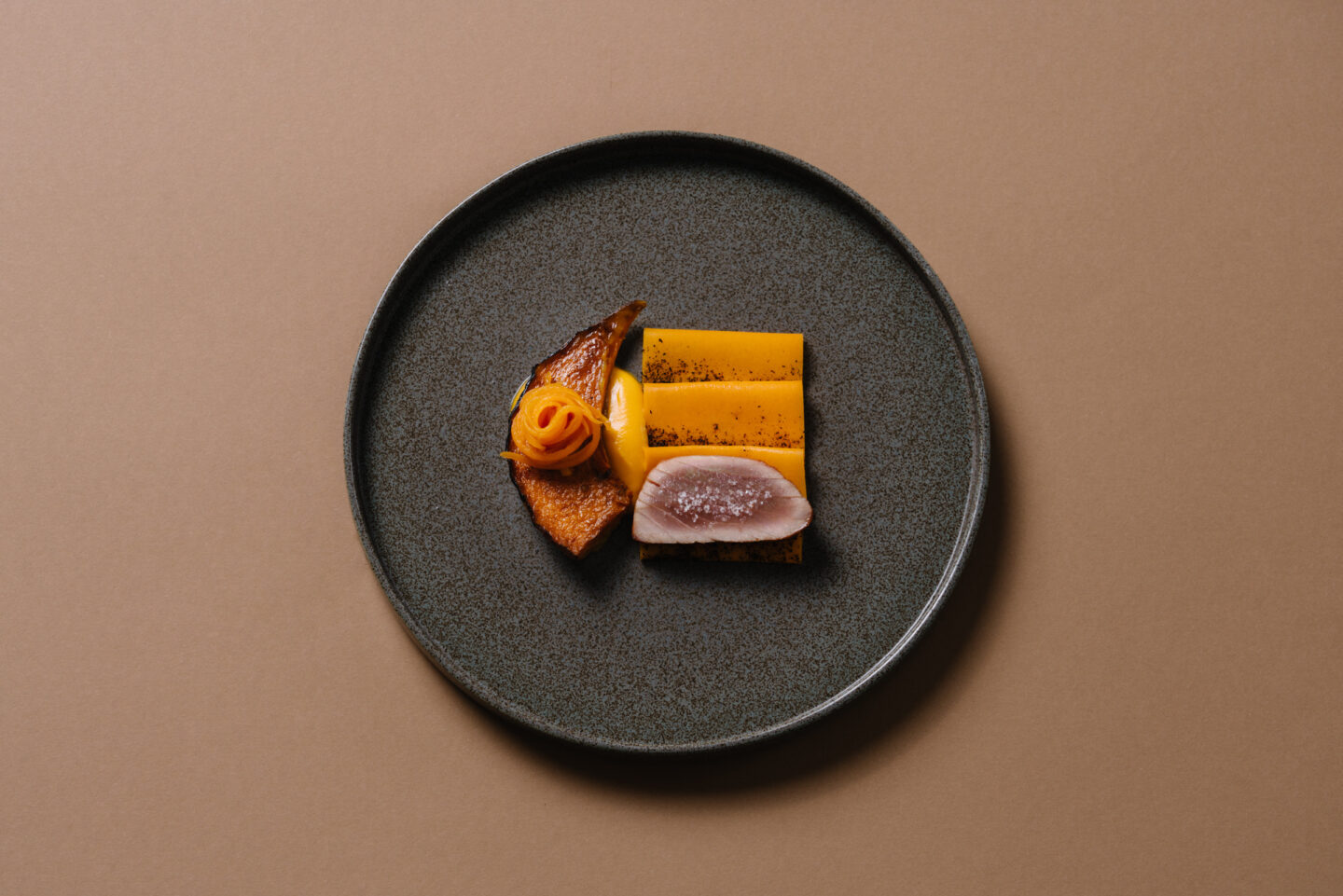
Some initiatives stand out for their more sensory-focused approach, such as a children’s dining experience designed as a playful and sensory introduction to fine dining. It’s a way of reminding us that, behind the concept, there remains an essential dimension: taste—the intimate experience.
Because that is precisely where the balance lies. By repeatedly referencing immersion, multidisciplinarity, and storytelling, Fud Läb is part of a major trend in contemporary gastronomy with a clear direction: that of a cuisine that is no longer content merely to nourish, but seeks to convey meaning.