And God created Club 55

The death of Patrice de Colmont, founder of the legendary Club 55 in Ramatuelle, sounds like the end of an era when carefree spirit rhymed with benevolence. To pay tribute to him, I invite you to (re)read the article I devoted a few years ago to this extraordinary character and timeless place.
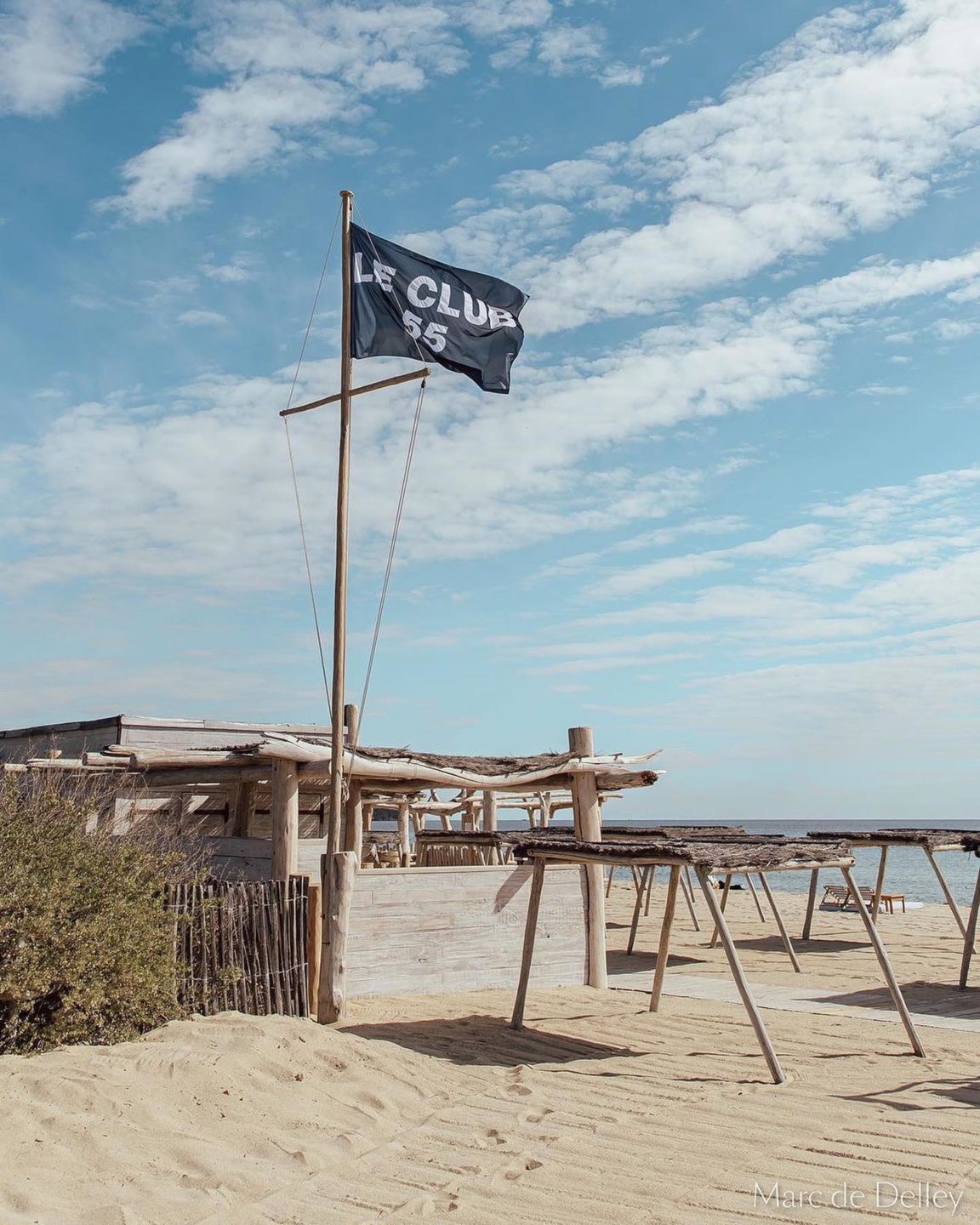
The tables have barely been set, and the waitstaff are already busy preparing for full service. Just another day in the sunshine of Club 55the most emblematic beach on the Saint-Tropez peninsula, indeed on the Côte d’Azur, and perhaps in the whole world. Shielded from prying eyes, amidst vegetation combining fine sand, bamboo, tamarisk and light wood, this haven of peace remains more than ever at the top of its game, despite changing culinary trends in the restaurant business. Behind this success? A dream, a dynasty, an inheritance, a coincidence, a film… A tribute to a family of visionaries.
Promised land
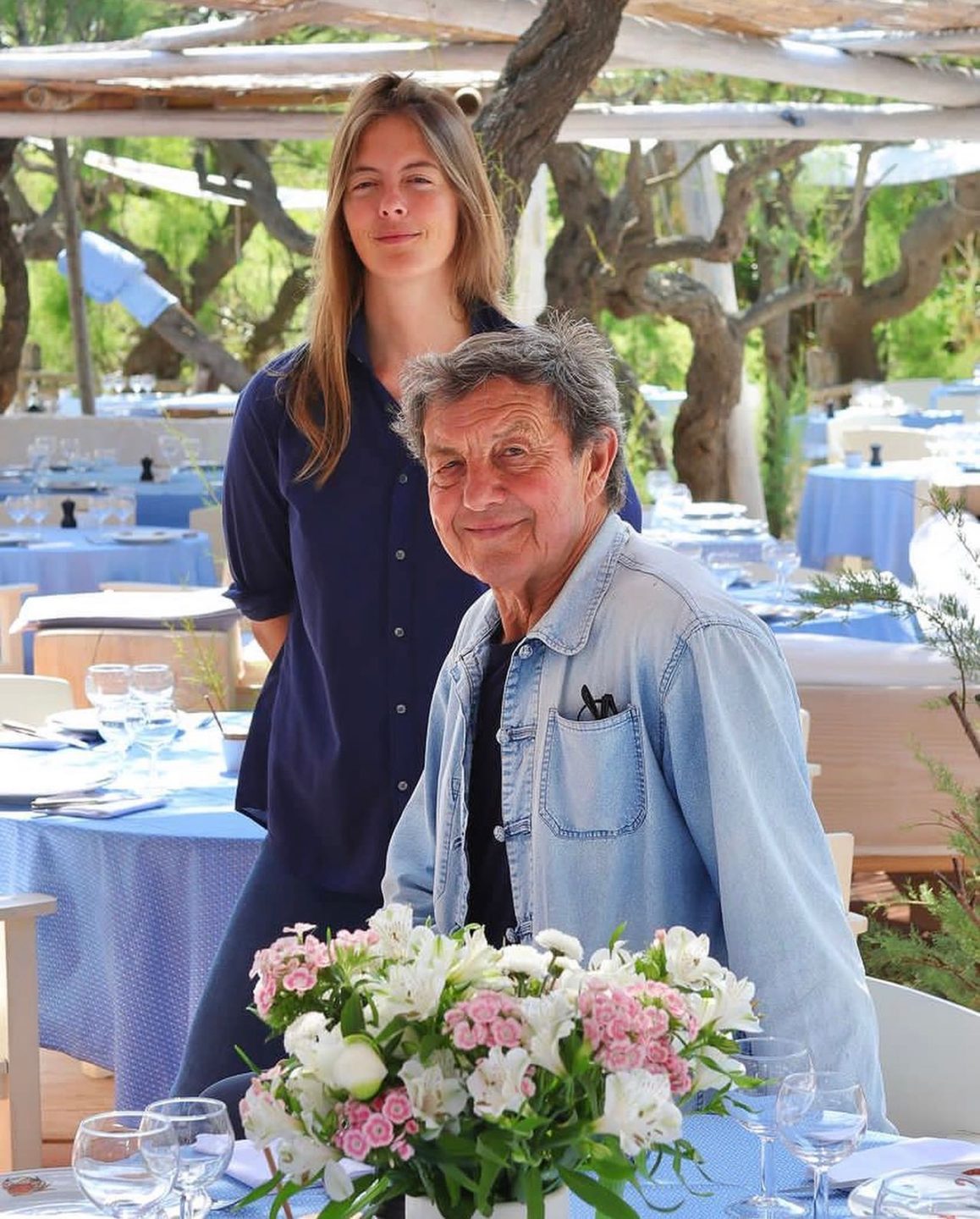
Patrice de Colmont weaves in and out of the bevy of tables before stopping in front of a small console that serves as his reception counter. The owner looks attentively at the hundred or so reservation cards, stacked one on top of the other and lined up to the nearest millimetre, bearing the names (written by hand) of the lucky customers about to come and sit down at the restaurant. After this almost obligatory, conscientious ceremony, the man with the shrewd look shakes your hand with an iron fist. “My childhood is here! Welcome to the restaurant.
The story of a unique saga begins. It began in 1935, with his ethnologist father on a quest to find the descendants of the Maya. Back in France, Bernard de Colmont met Geneviève during a screening of one of his documentaries. On their honeymoon, the young couple set off down the Colorado River in an Eskimo kayak.
In the aftermath of the Second World War, Bernard made a film about transporting oranges in the Mediterranean. Caught in a storm, the crew took shelter from the violent winds in the Bay of Pampelonne. The ethnologist falls under the spell of this untouched bay. A year later, the whole family disembarked and divided their time between Haute-Savoie in winter and Saint-Tropez in summer.
In 1954, a small inheritance enabled him to buy a piece of land. “A remnant of the war, it was nothing but sand, barbed wire and shell holes. For once we had a bit of money, my mother was furious. My father told us this would be our promised land,” says Patrice de Colmont.
A film that changes everything
The tribe builds three huts; one for the parents, another for the children, and the last for a makeshift kitchen. The explorer’s adage is well established: when a lost traveler is passing through, the family will offer hospitality. “You have to imagine another time. We had neither running water nor electricity. The de Colmonts set up a few tables and fetched fresh water every morning from the fountain on Place des Lices, in the heart of the village of Saint-Tropez. A small group of devotees soon formed, each bringing their own picnic. Just then, the crew of the film Et Dieu créa la Femme arrived with 80 mouths to feed daily. The family gets organized. They offer roastbeefs cooked in the baker’s oven, accompanied by ratatouille. “The film passed, but Roger Vadim, Brigitte Bardot and Jean-Louis Trintignant continued to come to our place, unaware that we weren’t a restaurant,” continues the owner.
Despite this sudden infatuation, Bernard de Colmont was hardly delighted to become a “soup merchant”. Rather than follow the restaurant models of the day, he imposed his own rules. At Club 55 (because it was officially created that year), it’s not the boss who’s in the kitchen. “In other words, he’s got more interesting things to do,” jokes Patrice, before continuing. And above all, the customer isn’t king here… because he’s a friend. A motto that has endured over the years. On the culinary side, grilled corn on the cob with beurre blanc, artichoke vinaigrette, grilled sardines and peppers with anchovy paste have all made their appearance on the menu. “Whatever the nationality or culture, it was important for customers to understand that they were in France, in Provence, on the shores of the Mediterranean. And nothing has changed 60 years later.
Patrice de Colmont had a happy childhood. Wild and marginal, he enjoyed a completely natural playground. He grew up in a post-war era where carefreeness was combined with an irrepressible thirst for life. “I was in charge of my own life from a very early age. In the 60s, there was a very strong desire for freedom, and Saint-Tropez represented this symbol of emancipation. The poor merged with the rich, the black with the white, and everyone lived together in a permanent party atmosphere. There was no longer any difference.
A craftsman’s life
The death of Geneviève de Colmont, when Patrice was just 20, disrupted the whole clan. The young man had a brief spell in real estate before returning to the fold. “Life made it necessary to take responsibility”. Worn out by life and trips to the ends of the earth, Bernard died in his turn. Nevertheless, the small family bistro continues to grow, while respecting its original philosophy. “Even today, when the restaurant is serving inordinate quantities of meals, we still operate like craftsmen. In our behavior and our way of doing things, we are the opposite of the tourist trap. Our only concern is that the customer comes back the next day.
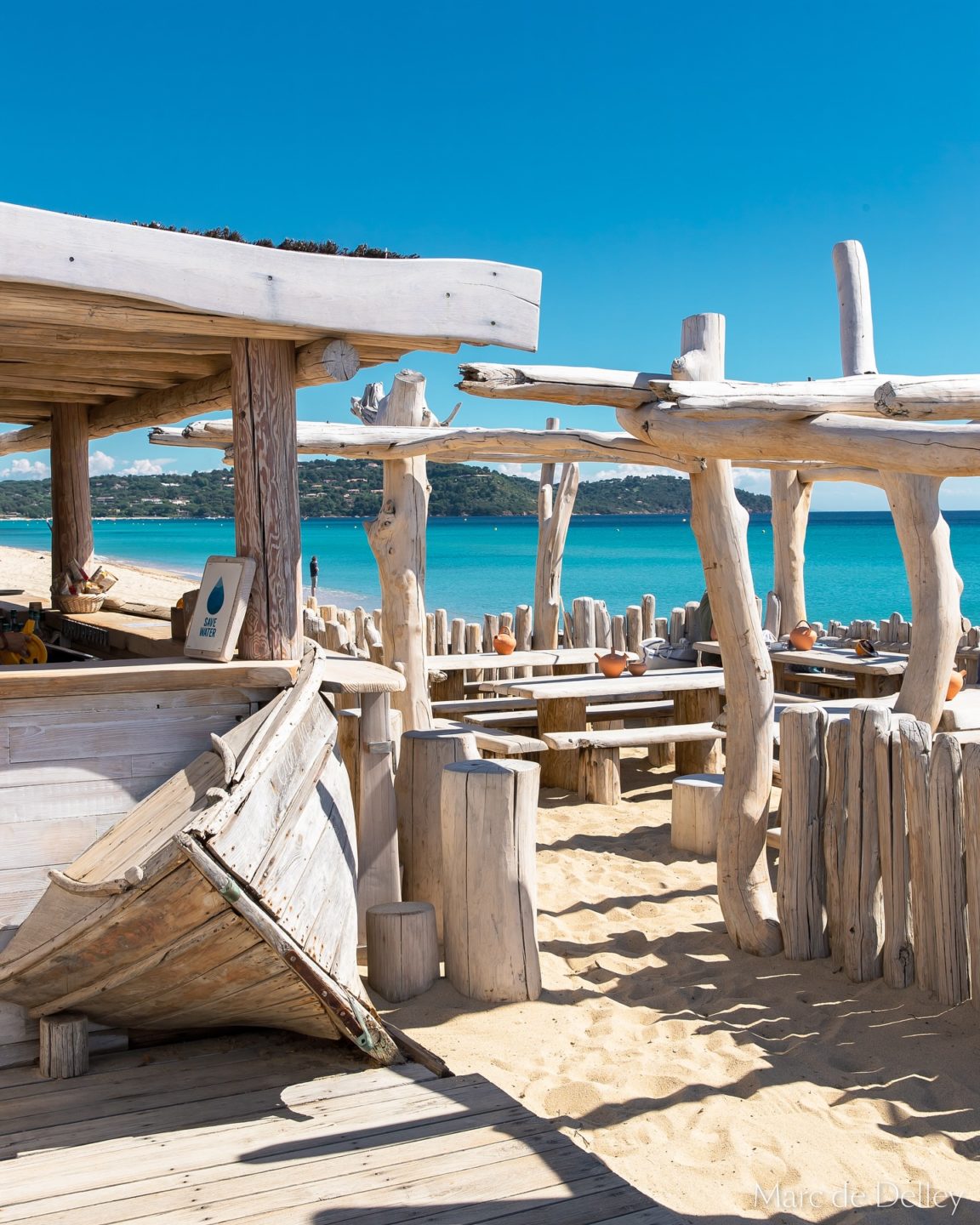
Passed unanimously by the French Parliament in 1986, the Coastal Act finally saw the light of day on the peninsula’s coastal landscape after more than three decades of procrastination. A redistribution of the cards that puts an end to certain establishments to make way for new ones. “Pampelonne is a much-coveted beach that has suffered from the excesses of domestic and commercial occupation, even if, despite everything, the place has been more respected than elsewhere; we haven’t transformed the site into a Croisette or a Promenade des Anglais”. The bay is classified as a “Site Remarquable Naturel”, the most restrictive distinction in terms of nature protection. As a result, everything in the public domain was razed to the ground. There followed a legal battle, votes, appeals, rules, amendments and compromises, until a consensus was reached. Finally, a new development scheme was devised by the commune of Ramatuelle.
Legendary peninsula
“Contrary to popular belief, some beaches in France charge a fee, others are totally free, but they are all public. Over time, the law has become even more restrictive: the proportion of the coastline allocated to commercial surfaces has fallen from 30% to 20% (including the length of the waterfront and the surface area). “Basically, this meant the disappearance of 14 establishments,” recalls Patrice de Colmont.
The commune of Ramatuelle took advantage of the situation to buy back a number of plots, which became communal land, thus saving eight establishments. From now on, 23 restaurants instead of 27 will share this sandbank, which is worth its weight in gold with one of the most restrictive specifications in terms of ecology. “Given the context, the situation is very positive. It was a global issue; we were expected to be there. In a few years’ time, everyone will be coming to learn from us.
Patrice de Colmont looks back on life with peace and serenity, aware of how lucky he is to have lived through an extraordinary page of history. Passionate about natural agriculture, he continues to participate in his own way in the reconstruction of biodiversity with his two farms dedicated to cultivating the earth. His daughter Camille joined him at the helm of the restaurant three years ago. “Club 55 is a common good that must be preserved. We’ve salvaged the best of the planet. The place where it all came together is here! This peninsula may be vulnerable, but it’s immortal.