Alexandre Mazzia, Marseille’s beating heart
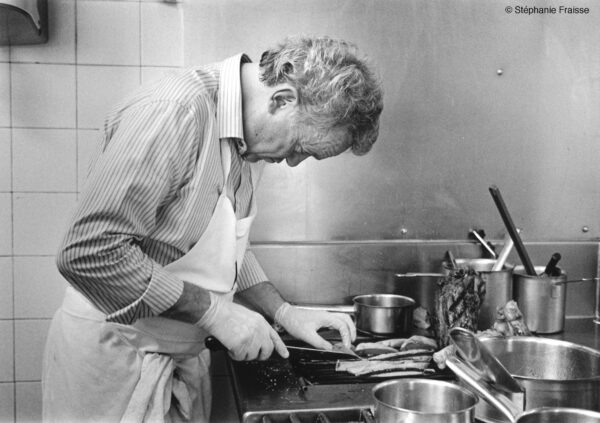
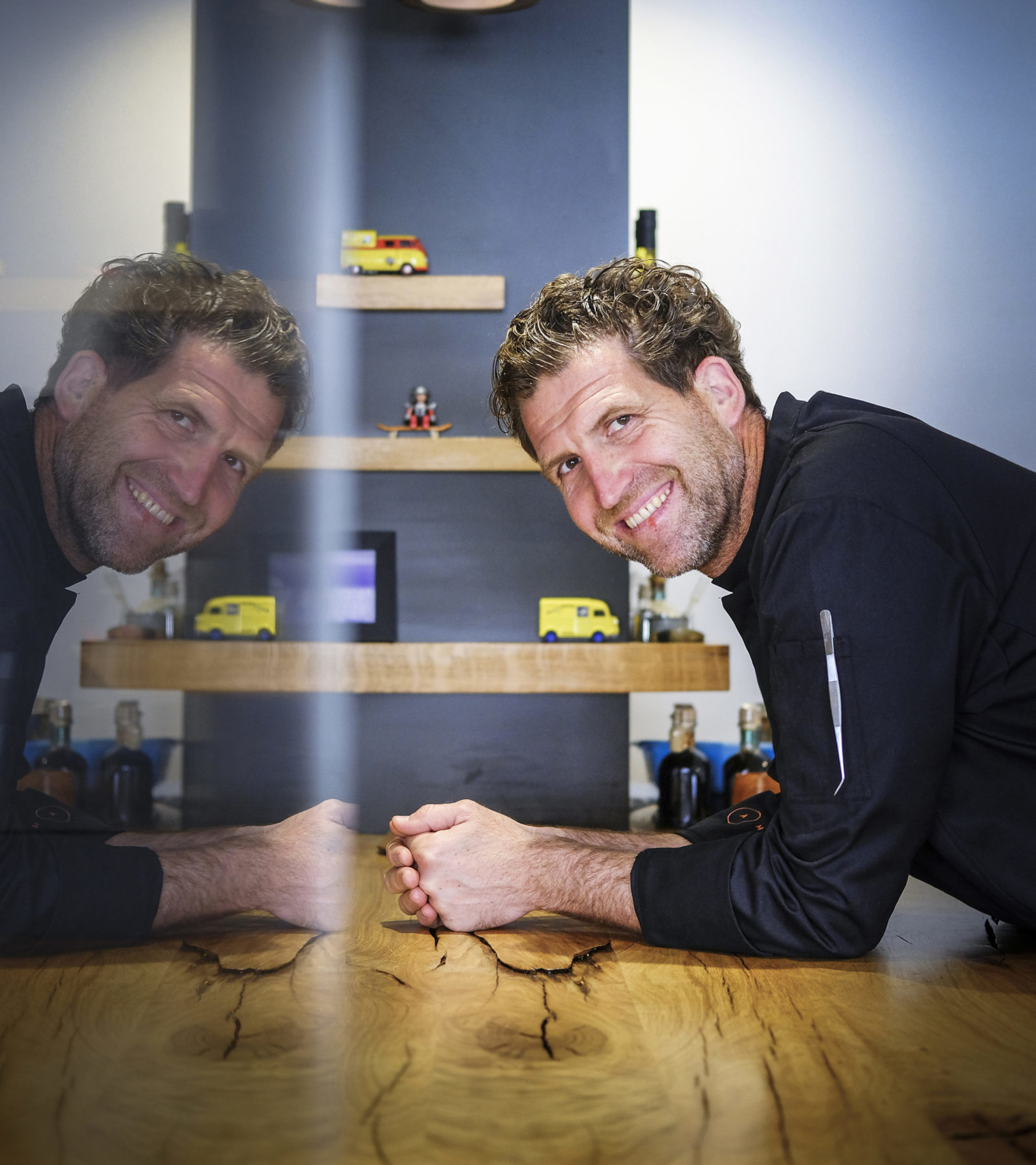
It’s 6.00 pm and the sun is setting on the Corniche Kennedy. As the Mediterranean Sea churns under a strong mistral wind, we turn off onto Avenue du Prado, not far from the famous Stade Vélodrome. Restaurant A.M., bearing the initials of chef Alexandre Mazzia, is just a stone’s throw from the soccer shrine. In just a few years, this intimate restaurant has become a gastronomic reference in France, joining the exclusive club of three Michelin stars. Wearing his black kitchen jacket, the chef welcomes us with undiminished passion and tenfold enthusiasm.
Despite the pressures of daily life, he retains a serene view of the world around him, passionate about his profession and in love with Marseille as he was on day one. It’s hard not to admire the career path and meteoric rise of this kitchen prodigy. Rest assured, the former professional basketball player keeps his feet firmly on the ground. And it’s his ability to stand back and take stock that makes him so endearing. “Liberté, Égalité, Fraternité” is France’s motto, while Alexandre Mazzia’s is “Humilité, Diversité, Générosité”.

Following in the footsteps of Gérald Passedat, you’ve just taken over the management of the Mucem’s kitchens. What motivated your choice?
“The Mucem is an extraordinary place, but the challenge in terms of catering is considerable. As I’m fortunate enough to have a very good relationship with Sodexo Live and the museum’s management, we quickly agreed on a gastronomic vision adapted to this unique place in the world, while respecting my culinary universe. There is a space where dishes in the spirit of my food truck Michel par AM will be prepared. On the same floor, we’ve planned a popular cross-section of regional and Mediterranean dishes, from grilled fish to revisited hummus.
When it comes to gastronomy, Marseille has never been so popular. How do you explain this phenomenon?
“Marseille is a great place to live. For chefs, the region remains a breeding ground for extraordinary products. Young people are attracted by the creative freedom and cultural mix that can be found on every corner of the city. The health crisis has opened up the city even more to the rest of France and Europe.
Do you still love this city?
“I’ve made this town my own. I took what I wanted to take. Without forgetting who it is, Marseilles emancipates itself, grows and remains, despite the passage of time, as astonishing as ever.

For a small restaurant like yours (barely 20 covers), are guidebooks always a guarantee of a certain number of reservations?
“In my opinion, guidebooks are still as important as ever, because they give legitimacy to our work and enable us to be located by customers who are eager to sample fine food. As I often say, guidebooks are not intended to be the driving force behind a restaurant, or to guarantee an increase in the number of visits or the average bill for a restaurant. Guidebooks are not in a position to adapt to an economic situation – good or bad – that affects the restaurant sector. These days, it’s all about added value.
At a time when we seem to be increasingly dependent on social networks, how do you manage your presence on these new communication tools?
“I certainly don’t worry about networking. To tell you the truth, I don’t have the time anyway (laughs). With me, there are no specifications when it comes to social networks. It used to be that you had to make your daily life look like your reality. Now it’s just reality! But my reality is the field, the stove, the restaurant and our customers. To tell the truth, I’m neither gifted nor necessarily comfortable committing myself more than that to virtual communication”.
As you cultivate your Mediterranean roots, intermingled with African influences, how are you helping your cuisine evolve?
“Through personal reflections, taking the time to respect professional life phases. At the moment, we’re doing a lot of work on scallops with natural caramelization. Changes are made as we go along, and we’re always thinking things through.
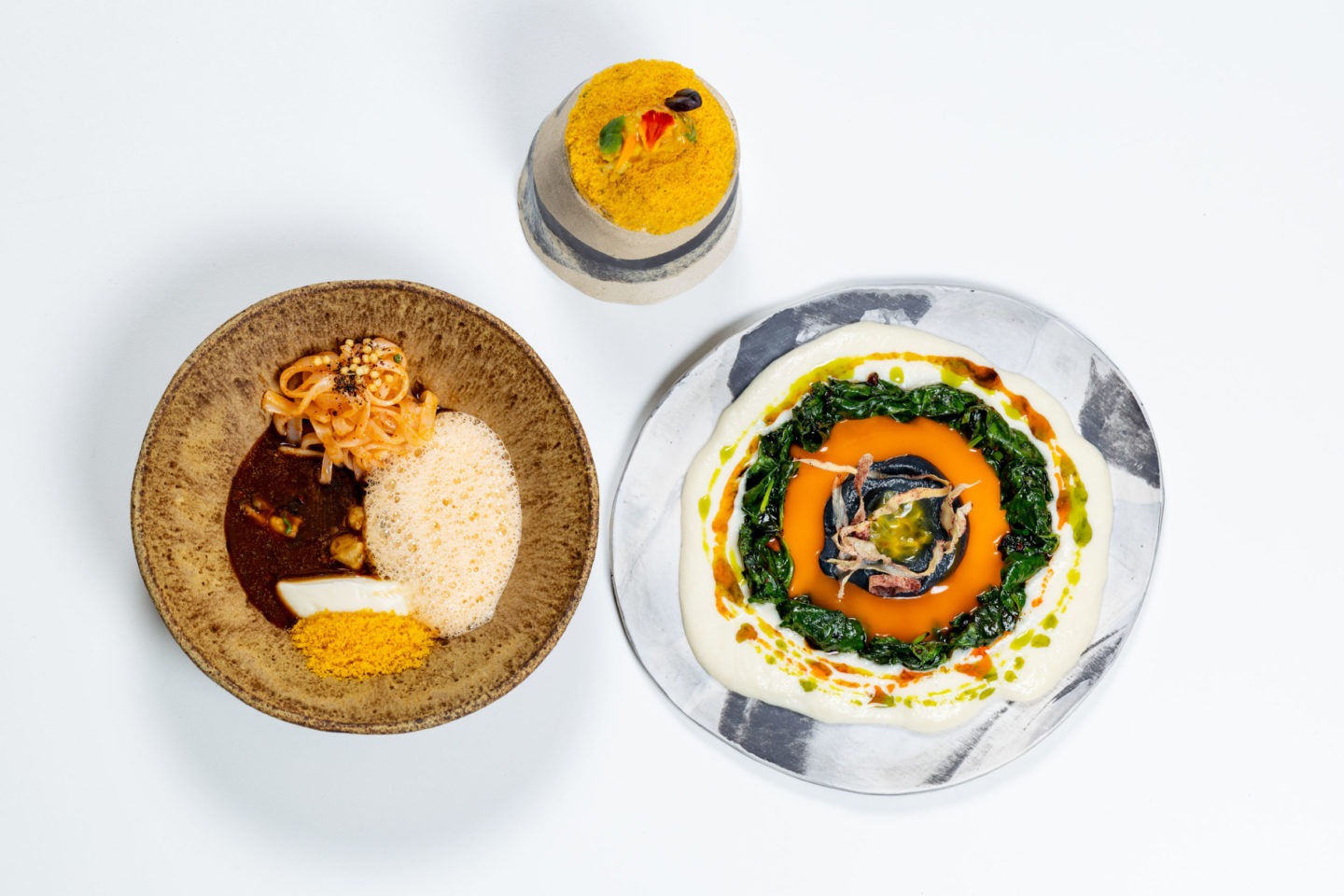
How do you nurture your creativity with menus of twenty or so sequences? Is gradual salinity an example?
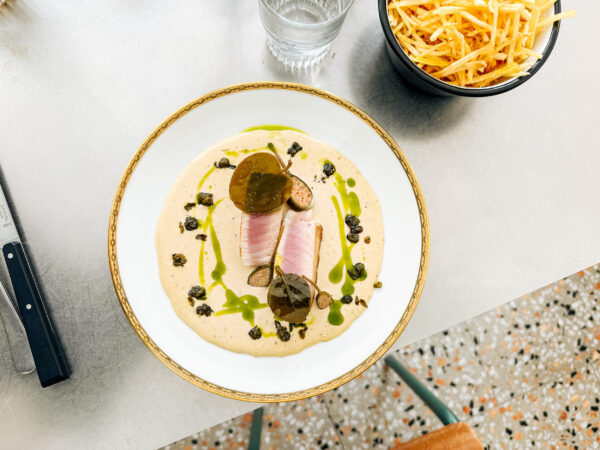
“Those two words mean a lot. Through various textures and sequences, we wanted to bring a natural salinity in crescendo mode. Whether with a squid or an oyster, we play with the intensity of the iodine. This allows us, through the tasting stages, to have a saline panel that varies in strength and subtlety. We’re a rhythmic restaurant, and our creativity needs to be punctuated by new innovations.
Apart from your unconditional love of basketball (AM is a former professional), what activities help you to unwind?
“I’ve recently been doing a lot of physical and mental preparation to get to grips with my services. Two times three hours of intense concentration takes a lot out of the body and mind. I needed to be able to enjoy a lunchtime service more than a walk outside my restaurant. People have no idea how many details have to be put in place to make a moment in the restaurant go without a hitch. Otherwise, I continue to do a lot of sport, not for performance but simply for pleasure.
You recently prepared over 1,000 meals a day for the Paris Olympic Games. What did this event mean to you?
“From a professional point of view, this is something unique. We paid a great deal of attention to nutrition, to help boost performance. From a human point of view, there was a sunny and benevolent energy… even within an extreme competition environment. The Para-Olympic Games made me realize that human beings are beautiful, with or without disabilities. I met people of immeasurable kindness and generosity.