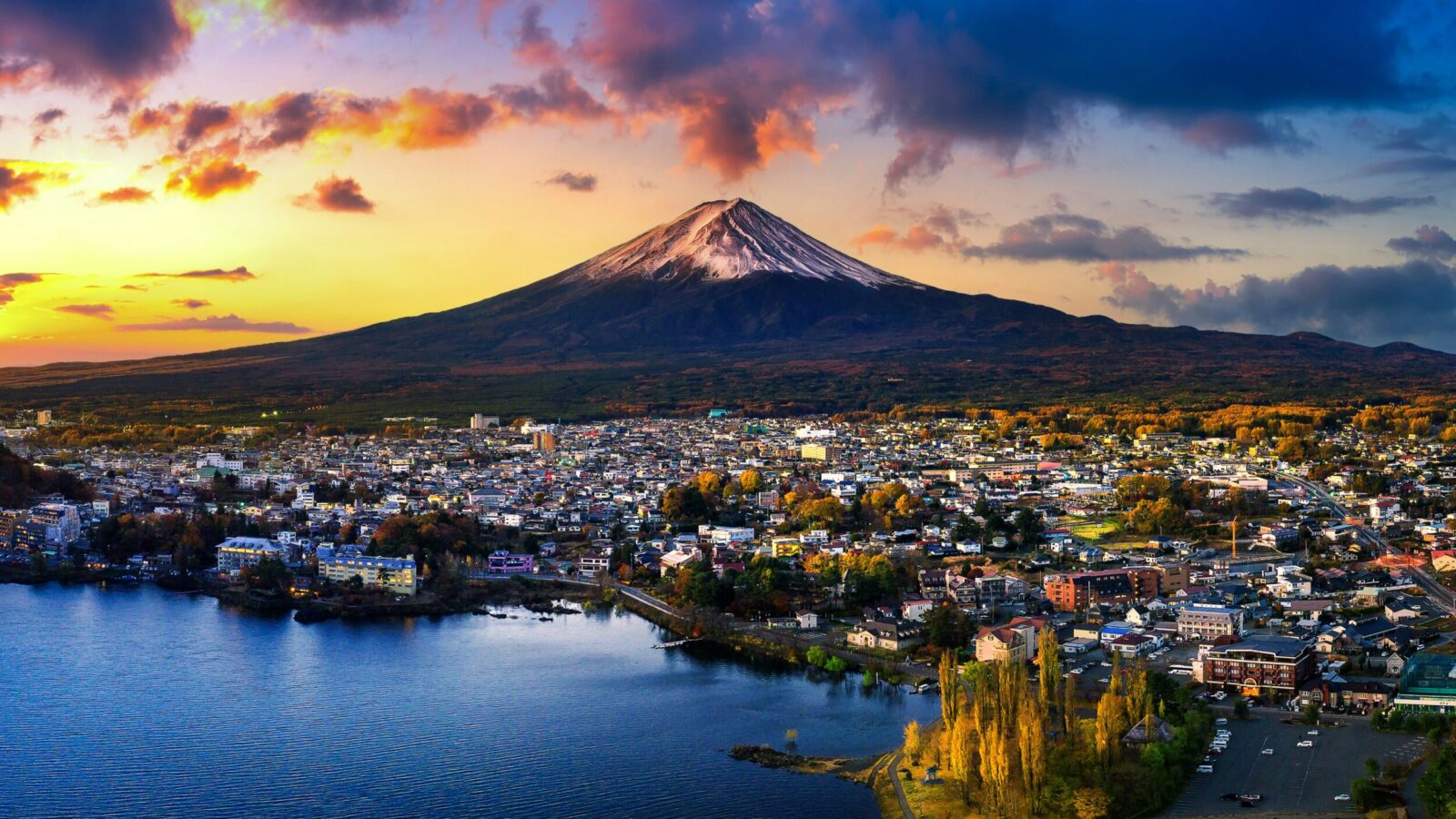
Japan, wine latitude
Pablo Nedelec didn’t arrive in Japan by chance. And as is often the case, the story begins with a parallel curiosity: sake. The taste of fermentations, textures and fragrances. Wine from the land of the rising sun came later, almost naturally. Not as an imitation of the West, but as a hint: what if Japan also had its own way of making wine?
For the entrepreneur, it all started on the spot. Not during a “wow effect” tasting in Geneva or Paris, but in Japan, during his regular travels. And then a name circulated, an island, a borderline latitude: Hokkaidō. It was from here that tiny quantities of bottles began to travel, slowly, out of the country.
The art of producing little
Before talking about “trends”, Pablo insists on one point: volume. Or rather, the absence of volume. In Japan, some estates produce barely a few thousand bottles. For a country of over one hundred million inhabitants, this is almost a statistical challenge. As a result, even in Japan, bottles have to be earned. You have to register, wait and hope.
And this scarcity is not a matter of chance, but of strategy. It’s a Japanese way of remaining on a human scale for the time being, of avoiding mass production and keeping wine within a local economy. Pablo even slips in an explicit comparison with our wine-growing regions: “a bit like Swiss wine”, apart from the fact that in Japan they conserve more. They put things aside. We think long term.
A modern story
Wine production in Japan began long before the digital age. But the Japanese wine that counts today – the one that has sommeliers and restaurateurs on the alert – is part of a recent history that begins with an American’s delightful paradox.
Pablo recounts how a certain Bruce Gutlove (“good love”, the name is almost perfect), an oenologist from Berkeley, was called to Japan in the ’80s at local insistence. At the time, some people were making wine in Japan… using grapes imported from the USA. Gutlove was called in to “do better”, to “do good”. Gutlove worked for twenty years at Coco Farm Winery, a unique estate north of Tokyo. Here, planting, experimenting and dealing with a complicated climate: heat, humidity and rain. Everything the vine doesn’t like when it wants to play the grand dame.
Then, as the years went by, Gutlove made an observation that would change the epicenter: the best grapes are produced in Hokkaidō, thanks to a fresher, more northerly viticulture. Kimura was already a famous figure in the region, persisting in producing quality Pinot Noir when others chose easier, more resistant and more affordable varieties. In Japan, obstinacy is not a fault. It’s a method. Gutlove eventually left, settling in Hokkaidō, and that’s where the story gets interesting, because on the island he set about training a generation of winemakers at his 10R Winery.
The new wave
Shortly before this shift, as Pablo explains, many Japanese wines were trying to imitate the style of Bordeaux and California wines, and to manufacture according to imported recipes ill-suited to the climate, resulting in wines that were often heavy, forced and unbalanced. The “new wave” occurred when some people stopped duplicating and started listening. Listening to the place, the tempo, following the idea of a nuanced Japanese taste, capable of accompanying without overwhelming. Pablo doesn’t like to stick the “nature” label everywhere, but he sees a line emerging: fewer inputs, less make-up, more minimalism, and a search for balance that’s akin to a form of aesthetics.
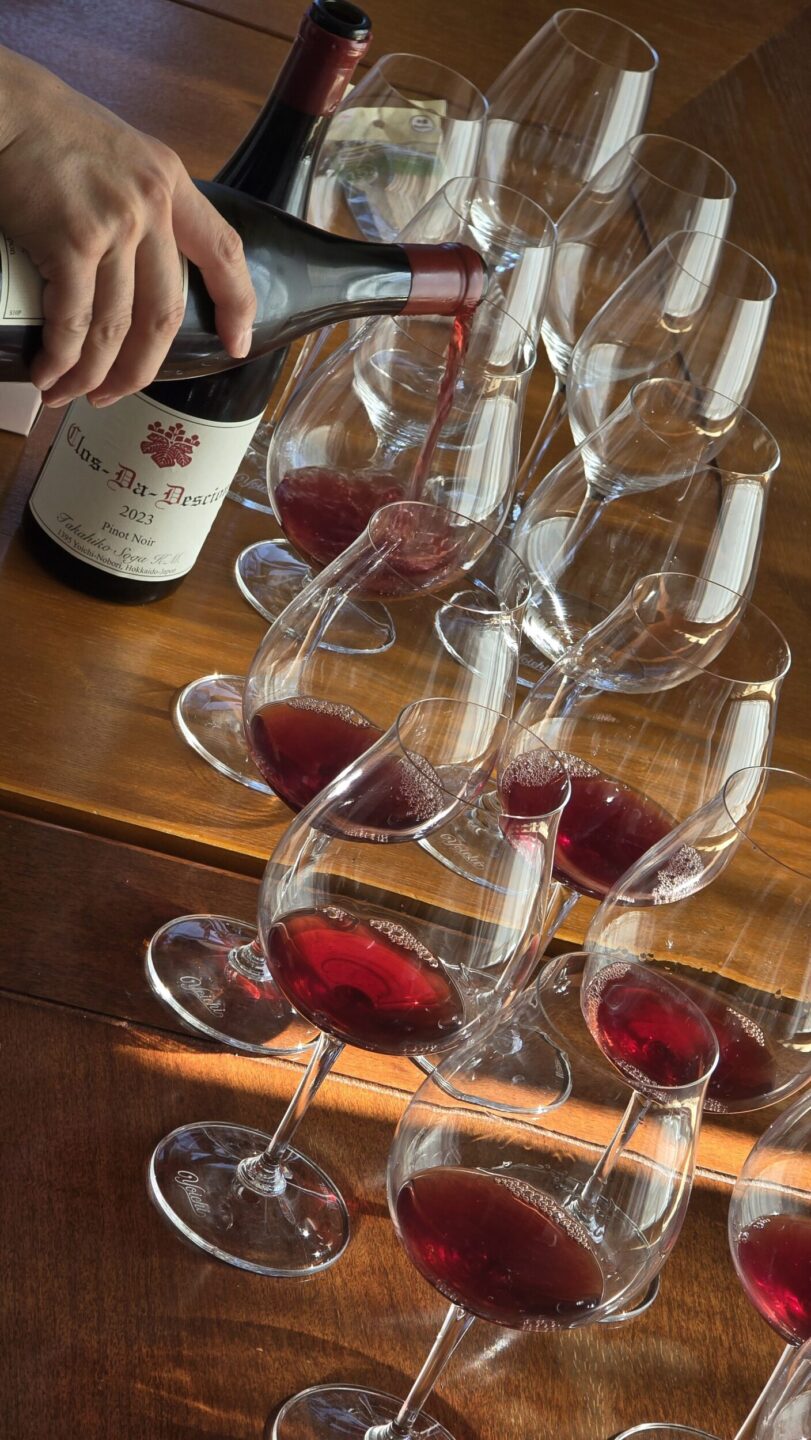
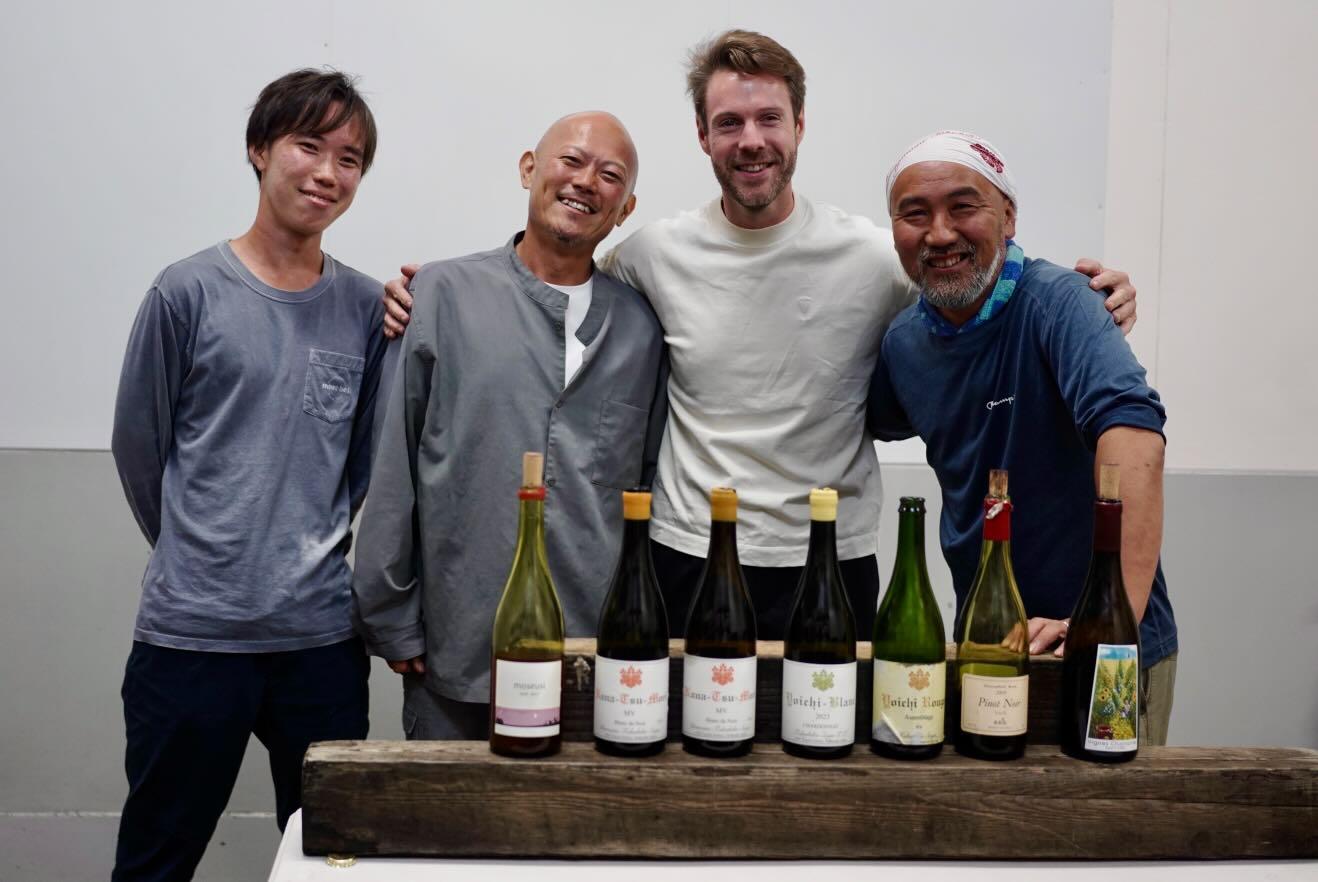
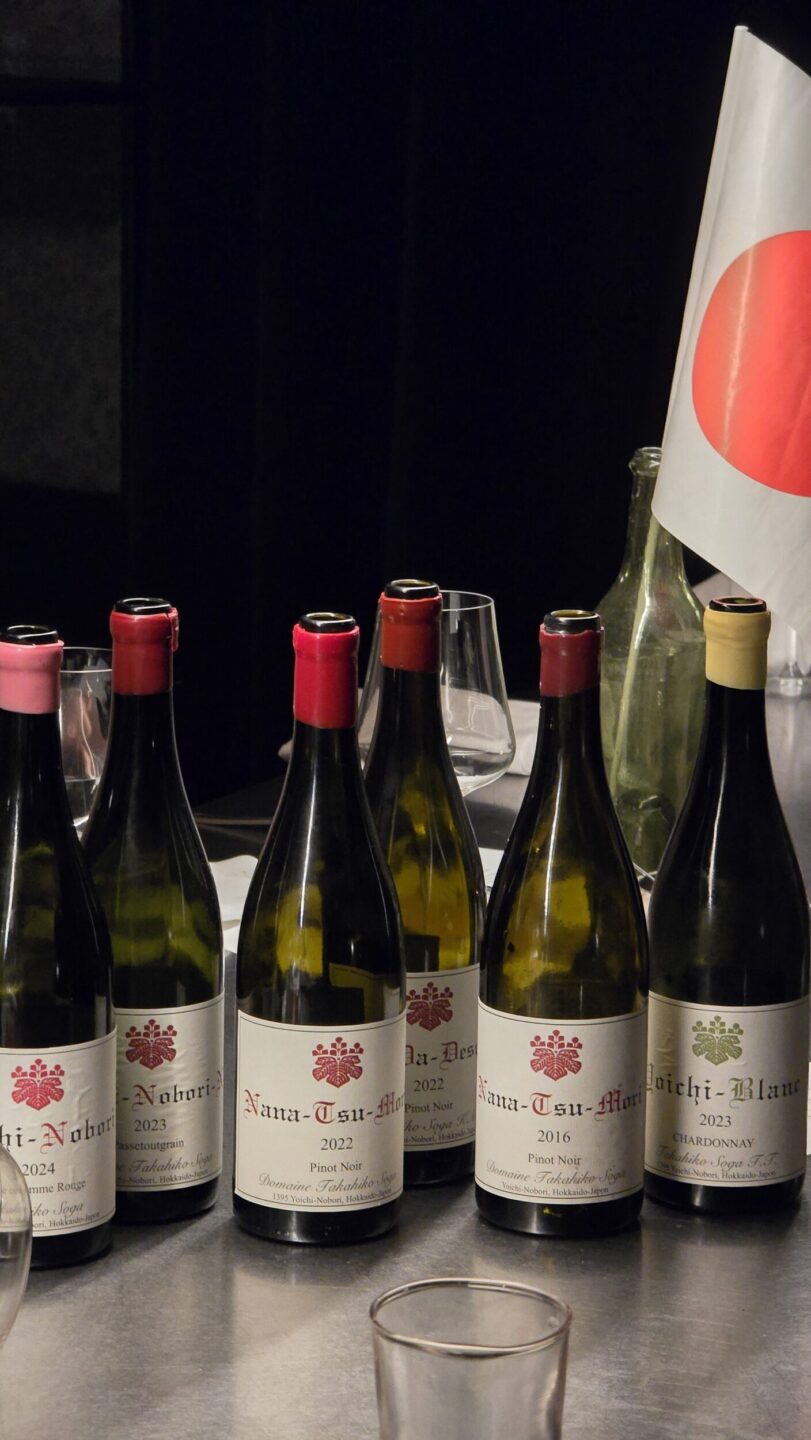
He cites the Takahiko Soga school (Takahiko estate, Hokkaidō), which favors simple work, modest containers and a peasant spirit, the exact opposite of a shiny stainless steel museum-cellar. The aim is to do with little, but to do it right. And above all, to reveal something that Pablo describes as a constant: a form of umami in the wines. A deep, savory quality reminiscent of dashi. At the same time, another path is taking shape: that of Japanese winemakers returning from France, particularly Burgundy, who are applying a more Burgundian approach to their winemaking choices. Pablo mentions Miyamoto Vineyard (Hokkaidō, Sorachi area), a Burgundy connoisseur who speaks French and defends a different wine grammar. Same island, different wine spirituality.
Hokkaidō: the island that changed the map
Why Hokkaidō? Because it’s a frontier island. Winters here are very cold, with massive snowfalls, summers hotter than you’d imagine, soils often volcanic and fertile. But this fertility is a false blessing, resulting in overgrown vines. You have to channel it. Find a balance in an environment where humidity can trigger disease at typhoon speed.
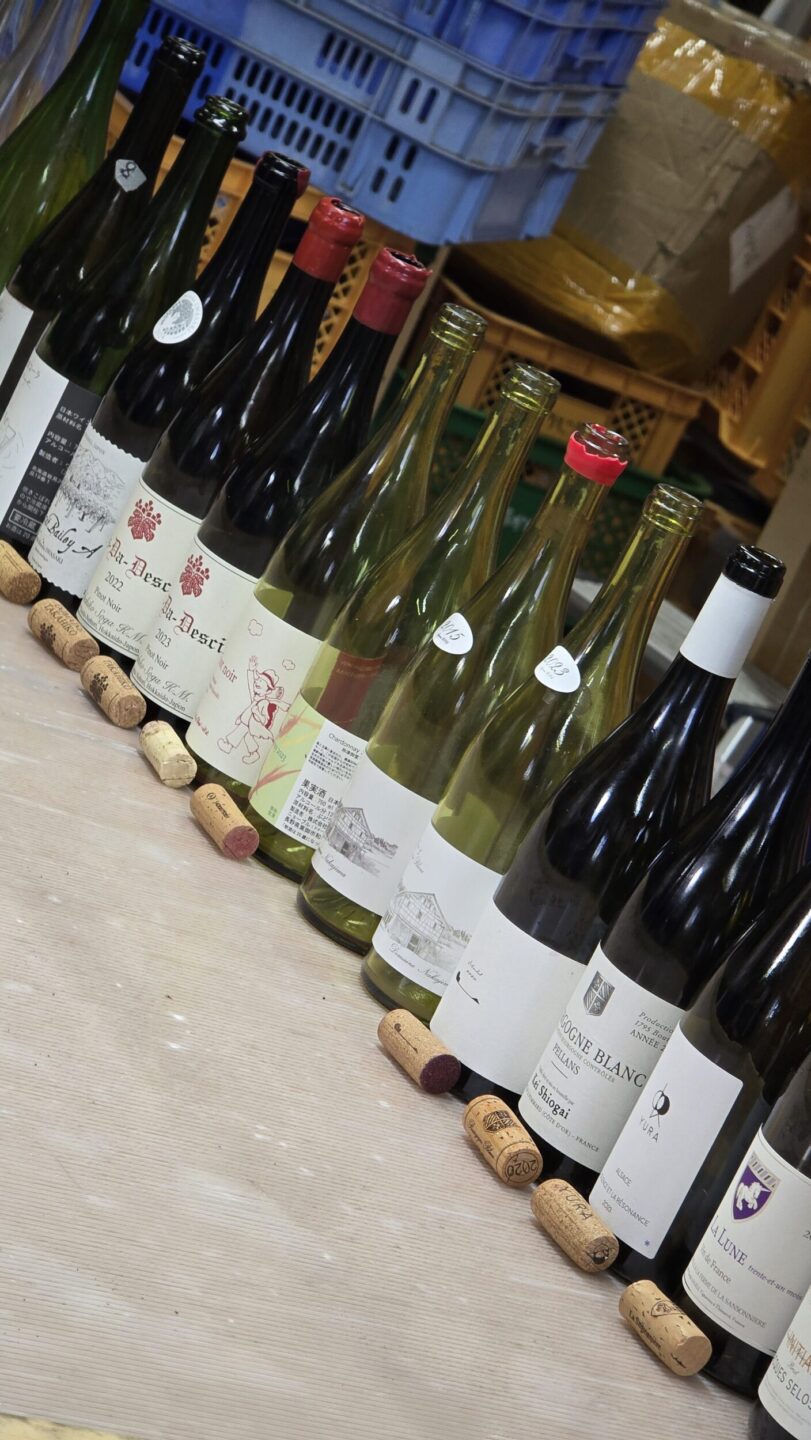
To give the reader an image, Pablo puts forward a comparison that is not an equivalence but a reference point “somewhere between Auvergne (for the volcanic), Burgundy/Jura (for certain profiles around pinots and chardonnays)”. And he describes the village of Yoichi, where the plots of land almost touch each other, where a micro-scene of winegrowing is being built up at a glance. He even mentions a twinning with Gevrey-Chambertin, a sign that bridges are being built, and not just via bottles.
The trend as seen from Switzerland
Basically, it’s not the volume imported that’s driving the trend, but rather the lack of volume. Pablo speaks very concretely about this: for certain cuvées, he sometimes hopes to obtain 24 or 60 bottles for the whole of Switzerland. This is far from a tidal wave. We’re talking about the murmurings of insiders, and it’s precisely these murmurings that excite the tables. Because these wines – and this is a key point – go well with modern, precise, savory, iodized, vegetal, Japanese or other types of cuisine. And when gastronomy takes hold of a rare wine, history accelerates. Pablo recalls the moment when certain estates became known to the general public thanks to restaurants like Noma in Copenhagen. A restaurant as global amplifier.
What Pablo Nedelec saw, beyond the bottles, was a family wine culture, almost communal. Just as rice was grown in the family, here friends and relatives volunteer their time to work on the vines as part of a common effort. And, above all, a determination not to turn wine into a luxury product, even if, ironically, some bottles in Europe see their price multiplied by five or ten on the parallel market. Far from all this, Pablo defends a way of doing things: modest, obstinate, radically coherent. Because he’s at the dawn of a period that’s not yet mainstream, but which is becoming structured and even attracting European winemakers. Because Japan, here, is not producing a new Bordeaux: it’s producing another idea of modernity.