“Socarrat” or the memory of rice
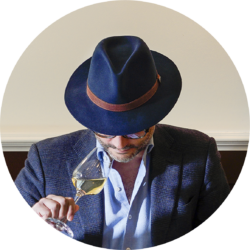
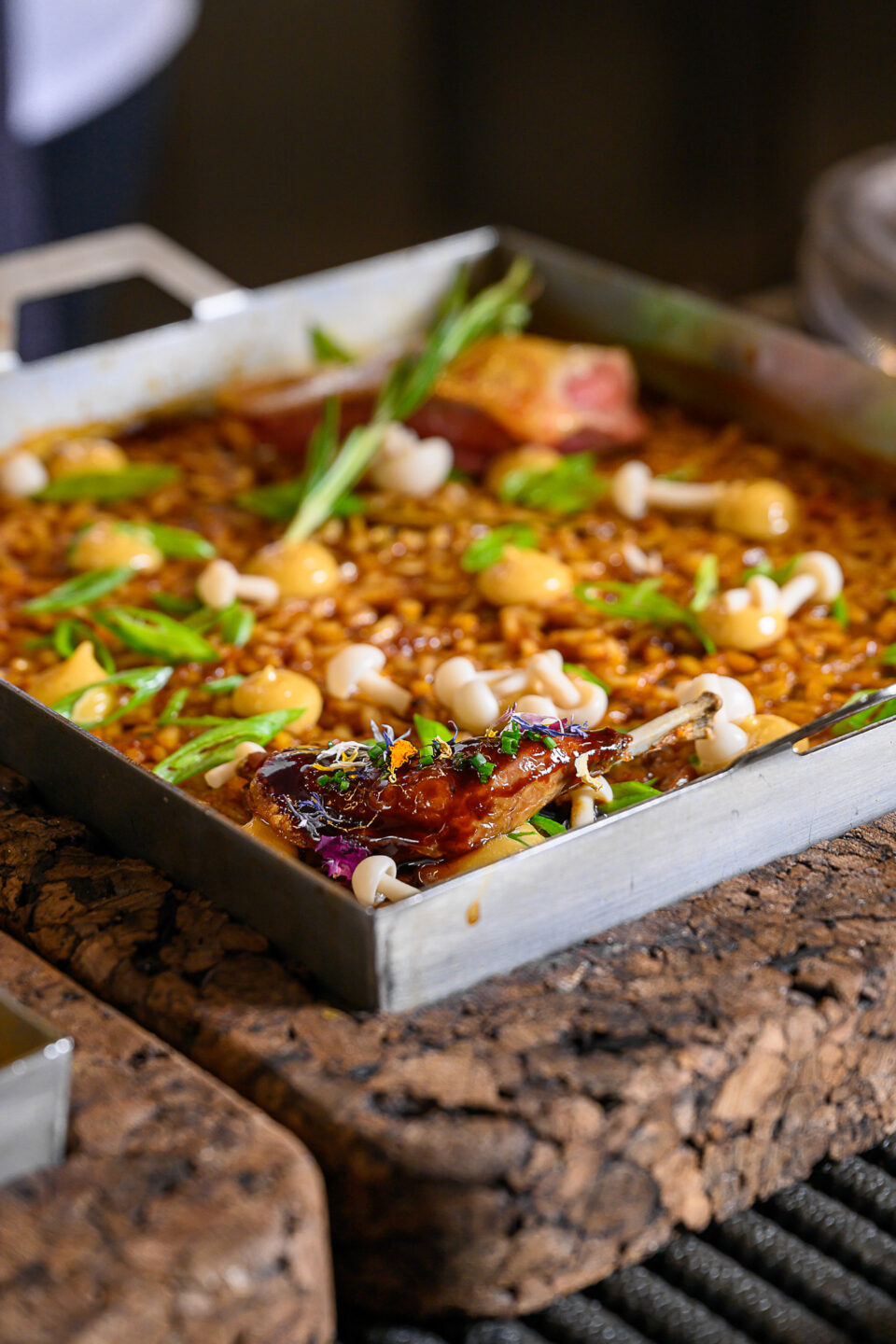
In the kitchen, there are dishes that nourish, and there are those that reflect an entire culture. À La Michelinechef Andrès Arocena’s paella belongs to the second category – a technical, almost ceremonial gesture, where fire, time and listening play as much a part as the hand.
From sofrito to socarrat
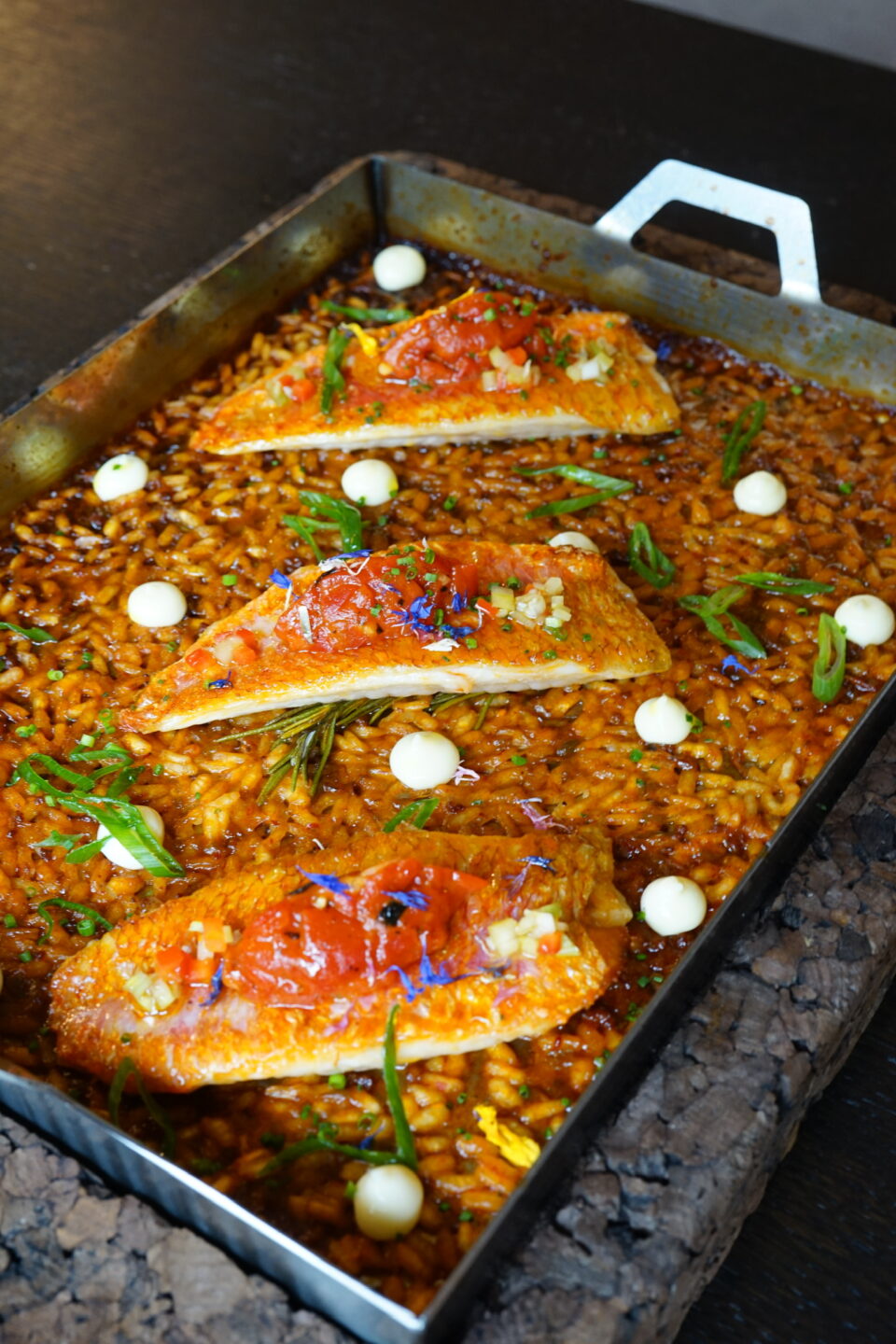
For this chef, whom we recently interviewed, paella begins long before the rice arrives in the pan. It begins with the choice of container, wide and low. The metal becomes a transmission surface: it must conduct the heat with precision, without brutality. Then comes the sofrito sauce, the aromatic backbone of the recipe, which is worked slowly until it reaches the slightly candied depth that binds the rest of the preparation together. But the key moment, the one that transforms a good paella into a great one, is called the socarrat.
The word almost evokes an insider’s secret. It refers to the thin layer of caramelized rice that forms at the bottom of the container, somewhere between crispy and toasty, never burnt. A delicate balance. Too early, the rice remains pale. Too late, the bitterness takes over. No timer here: just listen. The crackling changes, the fragrance becomes warmer, deeper. It’s at this precise moment that the cook knows.
Technical mastery and intuition
Andrès Arocena speaks of fire as an ingredient. The build-up is gradual, almost pedagogical. He feeds the flame, calms it, revives it. The broth evaporates, the rice tightens, and then comes that final phase when the pan seems to breathe on its own. This is when the socarrat is born, in that grey area between technical mastery and intuition. What’s striking is the apparent simplicity. Few spectacular gestures. No showboating. Just quiet rigor and an almost stubborn respect for the product and the time. Paella is not a quick dish. It’s a moment.
At the table, the spoon lightly scrapes the bottom and this sound becomes the signature of the dish. We look for those golden bits, we share them, we compare them. And suddenly it’s clear: socarrat isn’t just a texture… it’s the memory of fire.
Solar ingredients
Accompanied by pigeon or red mullet, Andrès Arocena’s paella reminds us of a simple fact: Mediterranean cuisine isn’t just about sunny ingredients. It’s about patience, listening and transmission. A cuisine that requires you to slow down, just enough to “hear the rice speak”.